Types of Building Materials & Finishes in Kenya
Types of Building Materials & Finishes in Kenya
A Complete Guide to Floor Finishes, Wall Finishes, Ceiling Finishes, Worktops, Roof Types, Wall Systems & More
In the Kenyan real estate and construction market, materials are about functionality, durability, aesthetics, cost, climate response, and long-term performance. Choosing the right finishes and structural materials directly affects:
-
Longevity and maintenance cost
-
Thermal comfort, ventilation & moisture control
-
Project budget accuracy
-
Market appeal and resale value
This guide explains the common and preferred building materials and finishes used in Kenya today — from floors to roofs — with insights on performance, suitability to Kenya’s tropical highland and coastal climates, and practical selection tips.
1. Floors: Types, Uses & Best Practices
Floor finishes are among the most visible and important materials in any building. They influence comfort, maintenance, pricing, and aesthetics.
1.1 Porcelain & Ceramic Tiles
Uses: Homes, apartments, commercial spaces
Pros:
-
Hard-wearing, stain-resistant, easy to clean
-
Wide range of colours and patterns
-
Porcelain has low water absorption — good for wet areas
Cons: -
Can be cold underfoot in elevated regions unless heated
-
Grout joints require maintenance
Kenya Context:
Tiles are the most common finish due to durability and easy maintenance — particularly in high-traffic spaces like living rooms, kitchens, corridors, and commercial lobbies.
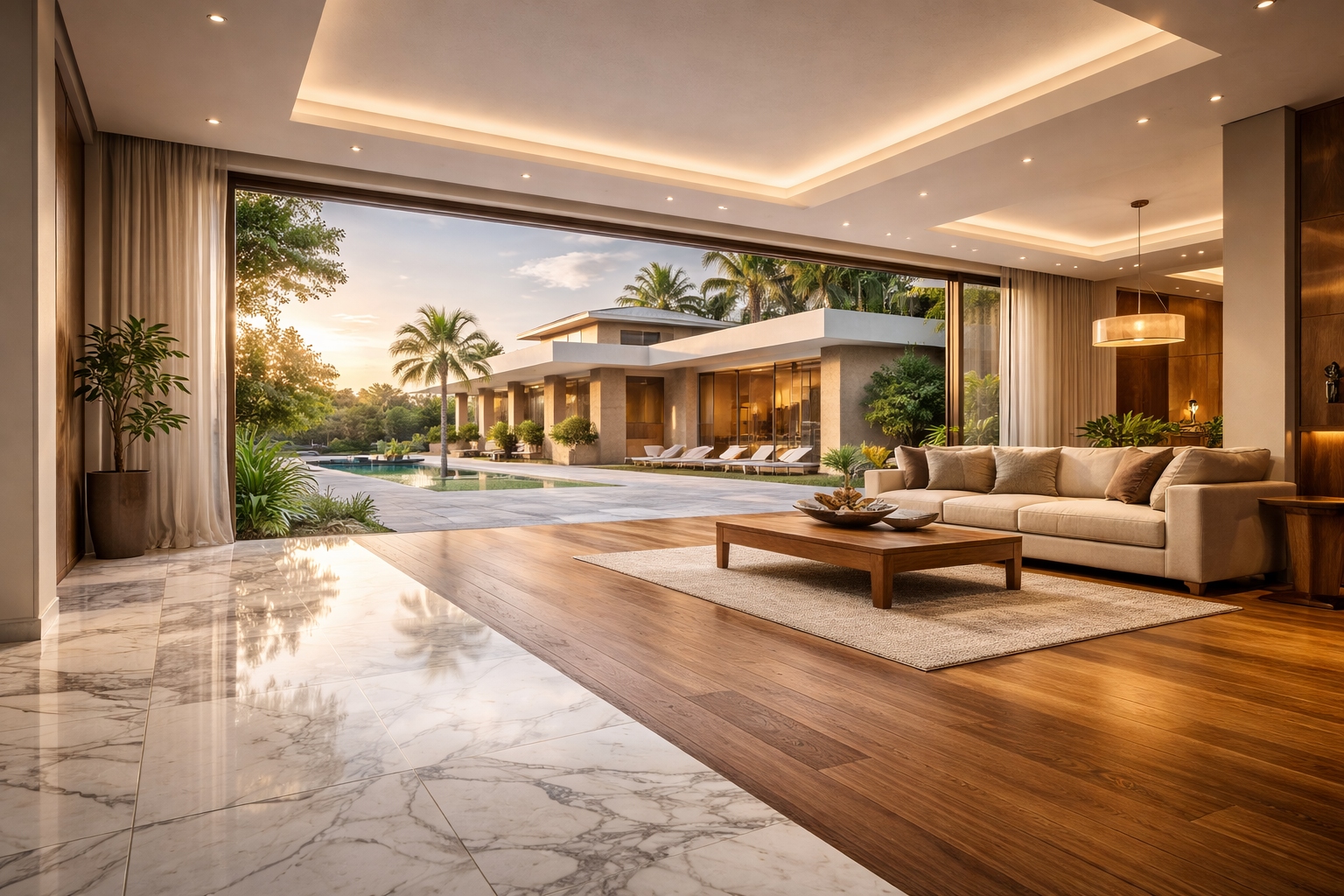
1.2 Natural Stone (Marble, Granite, Travertine)
Uses: Luxury homes, feature areas, foyers
Pros:
-
Timeless, premium aesthetics
-
Strong and durable
-
High resale appeal
Cons: -
Higher cost
-
Requires sealing and periodic maintenance
-
Slippery when polished and wet
Kenya Context:
Natural stone — especially granite — is popular in high-end developments (Karen, Runda, Lavington), where premium finishes justify the cost.
1.3 Timber & Engineered Wood
Uses: Bedrooms, lounges, executive offices
Pros:
-
Warm, premium feel
-
Can be sanded and refinished
Cons: -
Susceptible to moisture if not properly sealed
-
Pest risk if untreated
Kenya Context:
Engineered wood flooring is common in apartments, maisonettes & townhouses where real wood aesthetic is desired but humidity control is needed.
1.4 Polished Concrete
Uses: Industrial spaces, modern homes, garages
Pros:
-
Extremely durable
-
Minimalist aesthetic
-
Low maintenance
Cons: -
Can be harsh underfoot
-
Crack control is essential
Kenya Context:
Growing trend in contemporary architecture and live-work spaces, especially where an industrial aesthetic is embraced.
2. Wall Finishes & Cladding Systems
Walls both define space and protect against weather and wear.
2.1 Plaster & Paint
Uses: Most interiors
Pros:
-
Cost-effective
-
Ease of colour change
-
Smooth, clean look
Cons: -
Scratches and marks can show
-
Requires repainting over time
Kenya Tip: Use quality acrylic emulsion paints for washability and durability — particularly in homes with children or commercial spaces.
2.2 Feature Walls (Textured Paints, Wallpapers, Panels)
Uses: Living rooms, boardrooms, bedrooms
Pros:
-
Adds visual interest
-
Can define zones without structural change
Cons: -
Wallpaper can peel in humid & coastal areas
-
Maintenance varies by material
Kenya Context:
Textured finishes and decorative panels are especially popular in premium residential builds and corporate fit-outs.
2.3 Ceramic Wall Tiles
Uses: Bathrooms, kitchens, wet areas
Pros:
-
Water-resistant
-
Easy to clean
Cons: -
Grout discolouration if not sealed properly
Kenya Tip: Choose glazed tiles with high moisture resistance in coastal and lake regions.
2.4 External Wall Finishes
Types:
-
Acrylic textured render
-
Stone/cladding veneers
-
Painted plaster
-
Brick slips
Kenya Context:
Acrylic textured finishes paired with stone cladding accents deliver durability against equatorial rain, UV exposure, and thermal fluctuation.
3. Ceiling Finishes
Ceilings influence acoustics, lighting integration, and visual scale.
3.1 Gypsum Board (Plasterboard)
Pros:
-
Smooth, modern finish
-
Easy to integrate lighting & HVAC
Cons: -
Needs moisture control in wet areas
Kenya Context:
Favoured in living spaces and offices. Avoid in bathrooms unless moisture-resistant gypsum is specified.
3.2 Exposed Concrete Ceilings
Pros:
-
Industrial aesthetic
-
Minimal maintenance
Cons: -
Can feel cold/echoic without acoustic treatment
Kenya Context:
Used in contemporary commercial spaces and some minimalist residential designs.
3.3 Timber/Decorative Ceiling Panels
Pros:
-
Adds warmth and texture
-
Hides services neatly
Cons: -
Requires moisture control and termite-resistant treatment
4. Worktops, Islands & Countertop Materials
In kitchens and feature areas, worktops must balance beauty and function.
4.1 Granite
Pros:
-
Heat resistance
-
Scratch & stain tolerance
-
Natural variation = luxury
Cons:
-
Heavier installation
-
Periodic sealing
Kenya Context:
Granite remains the default premium choice in upscale homes and commercial kitchens.
4.2 Engineered Quartz
Pros:
-
Non-porous surface (low staining)
-
Consistent colour range
Cons: -
Slightly less heat resistant than granite
Kenya Tip:
Ideal for contemporary interiors where colour consistency and low maintenance matter.
4.3 Solid Surface (e.g., Corian)
Pros:
-
Seamless finish
-
Integrated sinks possible
Cons: -
Sensitive to high heat
Use in home kitchens, bespoke islands, and hospitality spaces.
5. Roof Types & Coverings
Roofs are Kenya’s first line of defense against sun, rain, and wind.
5.1 Corrugated Iron/Steel Sheets
Pros:
-
Affordable
-
Easy to install
Cons: -
Heat conductor (use insulation)
-
Noise in rain
Kenya Context:
Dominant in residential, commercial, and institutional buildings across regions.
5.2 Tile Roofs (Concrete or Clay)
Pros:
-
Thermal insulation
-
Classic aesthetic
Cons: -
Higher structural support needed
Kenya Context:
Common in Karen, Runda, and upscale residential estates.
5.3 Slab roof/flat roof
Pros:
-
Sleek, modern look
-
Excellent water shedding
Cons: -
Higher cost
Ideal where design and performance are priorities.
5.4 Green/Vegetated Roofs
Pros:
-
Thermal insulation
-
Stormwater management
Cons: -
Structural design considerations
Growingly seen in sustainable projects and estates.
6. Wall Structure Systems & Materials
6.1 Load-Bearing Masonry
-
Cement blocks or bricks
-
Durable, familiar construction
-
Standard in most Kenyan builds
6.2 Reinforced Concrete Columns
-
Structural skeleton with infill walls
-
Ideal for mid/high-rise apartments and offices
-
Allows larger openings and architectural flexibility
6.3 Lightweight Partitions
-
Plasterboard, metal stud framing
-
Ideal for offices and internal zoning
7. Doors and Windows
7.1 Aluminum Frames (Windows & Doors)
-
Low maintenance
-
Large glass spans possible
-
Good for Kenya’s urban aesthetic
7.2 Timber Doors
-
Warm finish
-
Must be treated against moisture and termites
7.3 UPVC & Composite Systems
-
Good thermal performance
-
Durable in coastal environments
8. Finishes & Details That Elevate Value
8.1 Skirting & Architrave
Clean installation with paint or timber improves visual continuity and durability.
8.2 Feature Lighting Integration
Lighting near ceiling coves and worktops enhances materials and mood.
8.3 Hardware & Fittings
Quality handles, hinges, and faucets affect long-term satisfaction and perceived value.
9. Sustainability & Climate Considerations in Kenya
Kenya’s equatorial position means:
-
Strong UV exposure
-
Seasonal rains
-
Highland cool nights (Nairobi, Naivasha)
-
Coastal humidity (Mombasa, Malindi)
Good material selection considers:
-
Thermal performance
-
Moisture resistance
-
Sunlight stability
-
Low life-cycle cost
Solar reflective roofing, ventilated ceilings, and moisture-resistant gypsum are practical responses to these conditions.
10. Cost Considerations & Value Engineering
Material cost in Kenya varies widely by:
-
Import vs local availability
-
Labour skill requirements
-
Regional logistics
-
Quantity and quality tiers
Smart budgeting weighs:
-
Initial cost
-
Life cycle cost
-
Maintenance realities
-
Buyer/resale expectations
Example: Porcelain tile may cost more initially than ceramic — but lower maintenance and longer life often justify the premium.
Material Choices Shape Experience & Value
Building materials and finishes are more than selections on a checklist. They are decisions that shape daily experience, cost of ownership, durability, comfort, and long-term property value.
In Kenya’s diverse climates and evolving market, informed choices — grounded in local reality, functional performance, and aesthetic clarity — ensure that properties not only look good today, but perform well for decades.