by admin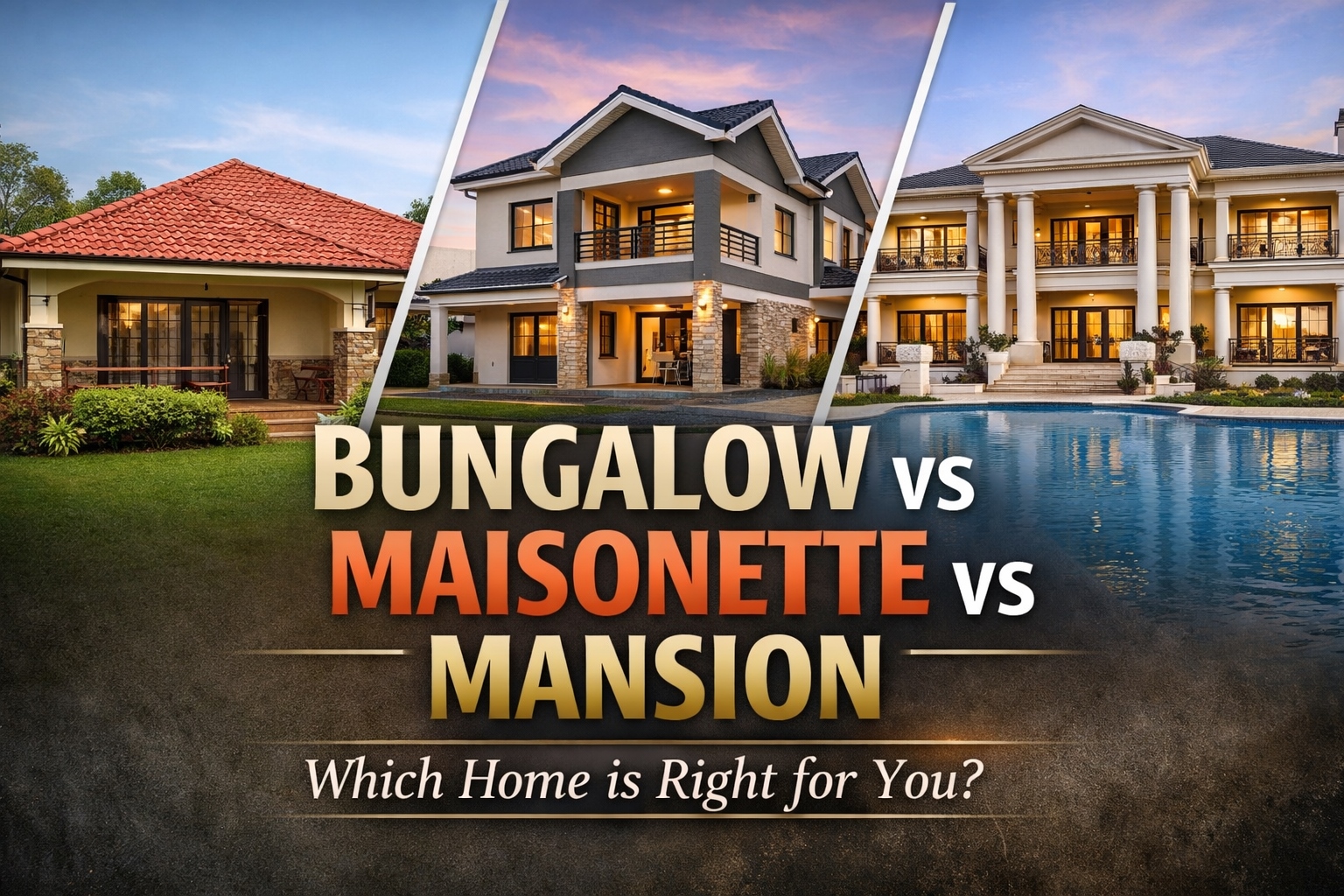
Bungalow vs Maisonette vs Mansion: How Architecture Tells the Story of How We Live, Build, and Aspire
Homes are never just shelters.
They are mirrors of their time.
Every residential form—whether modest or grand—emerges from a specific intersection of land availability, economic conditions, cultural expectations, and personal ambition. Over decades, as cities expand and societies evolve, the homes we build change with us.
Few comparisons reveal this evolution more clearly than that between the bungalow, the maisonette, and the mansion. On the surface, the distinction appears simple: one storey, two storeys, or many rooms. In reality, each represents a different philosophy of living, a response to changing land economics, and a statement about how people relate to space, privacy, and status.
To understand these homes is to understand how our towns grew, how families changed, and how aspirations shifted from survival, to comfort, to legacy.
1. The Bungalow: A Home Rooted in Calm, Space, and Human Scale
The bungalow’s story begins long before modern real estate markets, gated communities, or valuation reports.
Colonial Origins and Climatic Intelligence
The word bungalow originates from bangla, a traditional house form from Bengal, designed for hot climates. These early homes were single-storey structures with wide verandahs, high ceilings, thick walls, and generous openings. They were not minimalistic by choice—they were climatically intelligent.
When colonial administrators and settlers arrived in Africa, including Kenya, they brought this architectural logic with them. Early towns were planned horizontally. Land was not yet scarce, and urban density was not a concern. The bungalow became the default residential form for government officials, railway staff, missionaries, and later, the emerging professional class.
The Bungalow as a Symbol of Order
In early Kenyan towns, the bungalow symbolised:
-
Stability
-
Administrative order
-
Separation from congestion
Large plots allowed for gardens, servants’ quarters, and outdoor living. Life flowed slowly. The home was not something to rush through—it was something to inhabit fully.
Children played outside. Verandahs hosted evening conversations. Bedrooms opened directly onto gardens. The boundary between indoors and outdoors was deliberately blurred.
Post-Independence and the Bungalow’s Evolution
After independence, the bungalow remained dominant in established suburbs. However, land values began to rise, and urban populations grew. While bungalows were still built, they gradually became associated with:
-
Mature neighbourhoods
-
Lower density zoning
-
Long-term ownership rather than speculation
By the late 20th century, bungalows were no longer the most economical choice. They became a lifestyle decision rather than a default.
The Modern Bungalow: Luxury Through Simplicity
Today’s bungalow is rarely “basic.” Contemporary bungalows often feature:
-
Large footprints with distinct living and sleeping wings
-
Fully en-suite bedrooms
-
Open-plan kitchens flowing into dining and lounge areas
-
Covered outdoor entertainment spaces
-
Thoughtful landscaping
Ironically, what was once the most common house type has become one of the most exclusive. In many urban and peri-urban markets, a modern bungalow often sits on a premium plot and commands high land value.
What the bungalow represents today:
Calm living, accessibility, privacy, and a preference for understated luxury over vertical expression.
2. The Maisonette: Architecture Responding to Growth, Density, and Changing Families
If the bungalow reflects abundance, the maisonette reflects adaptation.
Why Maisonettes Became Necessary
As towns expanded, land became more expensive. Families grew. Urban centres densified. The question facing planners and homeowners was simple:
How do you get more space without buying more land?
The answer was vertical development—enter the maisonette.
Typically defined as a two-storey standalone house, the maisonette allowed homeowners to double their usable space without increasing plot size. This was not just an architectural decision—it was an economic one.
A Shift in How Homes Were Used
Maisonettes coincided with changes in family structure and lifestyle. Homes were no longer just places to sleep. They became:
-
Spaces for entertaining
-
Centres for family life
-
Increasingly private retreats
The vertical separation allowed for functional zoning:
-
Public life downstairs
-
Private life upstairs
Guests no longer passed through bedrooms. Noise could be managed. Privacy became architectural.
Maisonettes and the Rise of the Middle Class
In Kenya and across much of Africa, maisonettes became synonymous with middle-class aspiration. They were:
-
Larger than bungalows on similar plots
-
More affordable than mansions
-
Modern in appearance and layout
Developers embraced maisonettes for gated communities, where uniformity, security, and efficiency mattered. They allowed for higher densities while maintaining the psychological comfort of a “standalone home.”
The Contemporary Maisonette
Today’s maisonette bears little resemblance to its early predecessors. Modern designs often include:
-
Double-volume living spaces
-
En-suite bedrooms throughout
-
Family lounges or study areas upstairs
-
Rooftop terraces or balconies
-
Smart home features and energy efficiency
The line between a large maisonette and a small mansion is increasingly blurred. What distinguishes them now is less about height and more about intent and scale.
What the maisonette represents today:
Balance. A practical response to rising land values without sacrificing space, comfort, or modern living standards.
3. The Mansion: Architecture as Identity, Power, and Legacy
The mansion exists in a different category altogether.
Historical Meaning of a Mansion
Historically, a mansion was not merely a large house—it was an estate. It represented:
-
Wealth accumulation
-
Social status
-
Influence
Mansions were designed to impress, to host, and to endure. They often housed extended families, staff, and guests. Architecture was deliberate, grand, and symbolic.
In Kenya, early mansions were rare and typically associated with:
-
Colonial elites
-
Prominent landowners
-
Institutional figures
They stood apart—not just physically, but socially.
The Modern Mansion: Less About Excess, More About Experience
Modern mansions have evolved. While size still matters, contemporary mansion design focuses on:
-
Lifestyle amenities rather than sheer scale
-
Architectural uniqueness rather than replication
-
Privacy, security, and zoning
A modern mansion may include:
-
Home cinemas and gyms
-
Wine cellars and entertainment lounges
-
Multiple lounges and outdoor terraces
-
Staff wings and service circulation
Unlike other house types, a mansion is rarely built out of necessity. It is built as an expression of identity.
The Mansion as a Long-Term Asset
Mansions are often designed with longevity in mind. They are:
-
Multi-generational
-
Custom-designed rather than mass-produced
-
Located in prestige zones
From a valuation perspective, mansions behave differently in the market. Their value is driven as much by land, location, and uniqueness as by construction cost.
What the mansion represents today:
Presence, permanence, and legacy. It is architecture meant to be remembered.
Key Differences That Go Beyond Floors and Size
While it’s easy to compare these homes numerically, the real distinctions are experiential.
Spatial Philosophy
-
Bungalow: Horizontal flow, easy movement, connection to outdoors
-
Maisonette: Vertical efficiency, functional separation, adaptability
-
Mansion: Zoning, hierarchy, and curated experiences
Land Economics
-
Bungalows require more land per square metre of living space
-
Maisonettes optimise land value through vertical development
-
Mansions often prioritise prestige locations over efficiency
Lifestyle Impact
A bungalow encourages slower living.
A maisonette supports dynamic family life.
A mansion enables hosting, privacy, and exclusivity.
How Modern Markets Are Redefining These Homes
Urbanisation, infrastructure expansion, and changing lifestyles are reshaping all three typologies.
-
Bungalows are fewer but more luxurious
-
Maisonettes are becoming more sophisticated and amenity-rich
-
Mansions are becoming smarter, more discreet, and more sustainable
The future is less about labels and more about performance—how well a home supports life, work, rest, and investment goals.
Choosing Between a Bungalow, Maisonette, or Mansion
The right choice depends not on prestige, but on intent.
A bungalow suits those seeking peace, accessibility, and simplicity.
A maisonette suits those balancing space, cost, and modern family needs.
A mansion suits those building legacy, privacy, and long-term presence.
Each home type answers a different question:
-
How do I want to live today?
-
How do I want my home to work for me?
-
What story do I want this property to tell long after I’m gone?
Architecture as a Reflection of Life Stages
Most homeowners move through these typologies over time.
Few start with a mansion.
Many end in a bungalow.
In between lies the maisonette—a bridge between ambition and stability.
Understanding these homes is not just about buying property. It is about understanding how architecture evolves alongside human life.
And that, ultimately, is what makes real estate timeless.